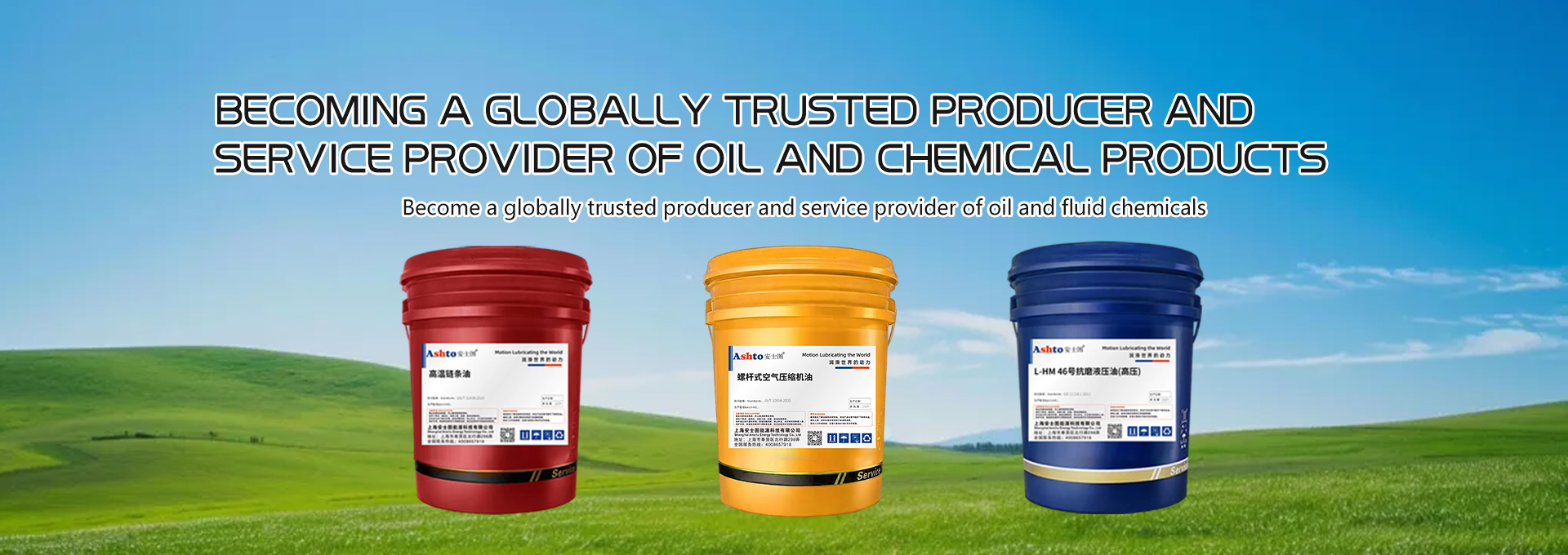




Welcome to theShanghai ASTO Energy Technology Co., Ltd

mailbox

97245418@qq.com

telephone

4008657918

Complete lubrication and maintenance solution for the whole industry chain

Why Choose Us

Oxidation resistance property
Outstanding oxidation resistance to meet long-term oil use requirements
Resistance to abrasion and corrosion
Excellent wear and corrosion protection helps extend the life of hydraulic components and improve production efficiency
thermal stability
Excellent thermal stability to prevent sludge formation at high temperatures
Hydrolysis stability
Excellent hydrolysis stability, effectively preventing blocking of filter
About Us
ABOUT US 13880m 2+

Area of plant area

About us

Shanghai Ansitu Energy Technology Co., Ltd. is a limited liability company that specializes in the production, research and development, and sales of industrial lubricants, automotive lubricants, greases, industrial processing fluids, rust proof oils, high-temperature chain oils, high-temperature greases, refrigeration machine oils, vacuum pump oils, food lubricants, hydraulic oils, synthetic gear oils, and other products. Our company has been recruiting agents for a long time to provide OEM brand services, making our products better serve society and our services more convenient. The products of Shanghai Anshitu Energy Technology Co., Ltd. enjoy a high status among consumers. The company has established long-term and stable cooperative relationships with multiple retailers and agents. Its main products include industrial gear oil, hydraulic oil, mechanical oil, turbine oil, compressor oil, papermaking oil, and transformer oil. With strong strength, emphasis on credit, adherence to contracts, and assurance of product quality, we have won the trust of our customers through our diversified business characteristics and the principle of small profits and high sales volume.

SEE MORE
Our Successful Projects

case

Latest Product Industry News

NEWS

Judgment of industrial lubricating oil aging: interpretation of 4 key indicators
2025-10-09
Deterioration of lubricating oil will cause performance degradation, and timely judgment of aging degree can avoid equipment damage. Key judgment indicators include: 1 Acid value: the acid value of new oil is generally ≤ 0.1mgKOH/g. When the acid value rises above 0.5mgKOH/g, it indicates that the oil is seriously oxidized and needs to be replaced immediately; Viscosity change rate: when the viscosity change exceeds ± 15%, the lubrication effect will be affected, for example, the increase of viscosity may lead to the increase of pressure loss of hydraulic system, and the decrease of viscosity may lead to poor lubrication of bearing; Moisture content: when the moisture content exceeds 0.1%, the lubricating oil film will be damaged, resulting in equipment corrosion, which can be detected by Karl Fischer method; Metallic wear particles: According to the oil spectrum analysis, if the iron content exceeds 200ppm, it indicates that the gear or bearing has abnormal wear and needs to be stopped for inspection. In addition, the appearance observation can also preliminarily judge the aging condition. If the oil product is black, turbid and smells, it usually means that the aging is serious.
SEE MORE
Food grade industrial lubricants: Safety standards and application scenarios
2025-10-09
Food grade industrial lubricants are mainly used for food processing, pharmaceuticals, cosmetics and other equipment in direct or indirect contact with the product, and shall meet strict safety standards. At present, the international mainstream standard is NSF certification, including three grades: H1 (occasional food contact), H2 (non-contact food) and H3 (water-soluble lubricating oil). Among them, H1 lubricating oil shall be food grade base oil (such as refined white oil and synthetic ester) and food grade additive, and the acute oral toxicity (LD50 ≥ 5000mg/kg) will not cause harm to human body. In the application scenario, the chains of food baking equipment shall be applied with H1 grade high temperature chain oil, with temperature resistance of more than 200 ℃ and no odor; The hydraulic system of the beverage filling equipment needs to use H1 anti-wear hydraulic oil to avoid beverage pollution caused by oil leakage. It is worth noting that food grade lubricants shall be subject to regular purity testing and shall not be mixed with non-food grade lubricants. The oil change records shall be kept for at least 2 years to meet the food safety traceability requirements.
SEE MORE
Hydraulic system lubricating oil: balance between viscosity selection and anti-wear performance
2025-10-09
The normal operation of the hydraulic system depends on the precise matching between the viscosity of the lubricating oil and the anti-wear performance. The viscosity shall be determined according to the working temperature of the system and the pump type: due to the small clearance of the vane pump, the low-viscosity lubricating oil (such as 32 # anti-wear hydraulic oil) shall be selected to avoid the difficulty in oil suction of the pump due to the high viscosity; Due to high pressure (generally ≥ 21MPa) of plunger pump, high viscosity lubricating oil (such as No. 68 anti-wear hydraulic oil) shall be selected to ensure the sealing performance of hydraulic oil. For anti-wear performance, the hydraulic oil shall be added with anti-wear additives (such as vulcanized olefin and phosphate ester). Through four-ball machine test (GB/T 3142), the wear spot diameter shall be ≤ 0.4mm (1200r/min, 392N, 60min). In addition, the lubricating oil of the hydraulic system shall have good viscosity-temperature performance, and the viscosity index shall be ≥ 95 to avoid the system pressure fluctuation caused by temperature change and ensure the equipment operation accuracy.
SEE MORE
Industrial Lubricant Pollution Control: Reduce Equipment Failures from Source
2025-10-09
Lubricating oil pollution is the main cause of equipment wear and failure of hydraulic system, and pollution control shall be started from the whole process of "storage, transmission and use". In the storage link, the lubricating oil barrel shall be placed at an angle of 45 ° to avoid water mixing caused by ponding at the barrel mouth. Meanwhile, different types of lubricating oil shall be stored in different areas to prevent mixing (for example, mixing of hydraulic oil and gear oil will lead to decline of anti-wear performance); Special oil filter (filtering accuracy ≥ 10 μ m) shall be used for oil filling equipment in the conveying link, and the oil filler shall be cleaned before oil filling to avoid dust and impurities; Check the breather valve of the oil tank regularly to ensure that the desiccant is effective and prevent moisture and pollutants from entering the atmosphere. Meanwhile, install the oil return filter in the hydraulic system to timely filter the metal chips in the oil. The data shows that effective control of lubricating oil pollution can reduce the equipment failure rate by 40% and extend the service life of lubricating oil by 50%.
SEE MORE
Gearbox lubricants in the wind industry: Differential selection between offshore and onshore units
2025-10-09
As the core component of the wind turbine, the wind power gearbox requires lubricating oil to withstand the working conditions of long-term low speed and heavy load and frequent start and stop, and the selection of onshore and offshore units is significantly different. Mineral oil heavy load industrial gear oil can be selected for onshore wind power gearbox, with viscosity grade of 320 or 460. Extreme pressure agent and antioxidant shall be added to additive, and the oil change period is usually 2-3 years; Synthetic gear oil (such as polyalpha-olefin PAO base oil) shall be selected for offshore wind power due to high humidity and salt mist environment. Meanwhile, it shall have excellent anti-rust and anti-corrosion performance. The acid value shall be controlled below 0.1mgKOH/g, and the oil change period can be extended to 4-5 years. In addition, the wind power lubricating oil shall be certified according to GB/T 31415-2015 Gearbox for Wind Turbine Generator System, and the oil particle size test (ISO 4406 standard) shall be carried out regularly to ensure that the particle size level is ≤ 18/15, so as to avoid increasing gear wear.
SEE MORE
Automotive Manufacturing: Lubricant Solutions for Welding Robots and Stamping Equipment
2025-10-09
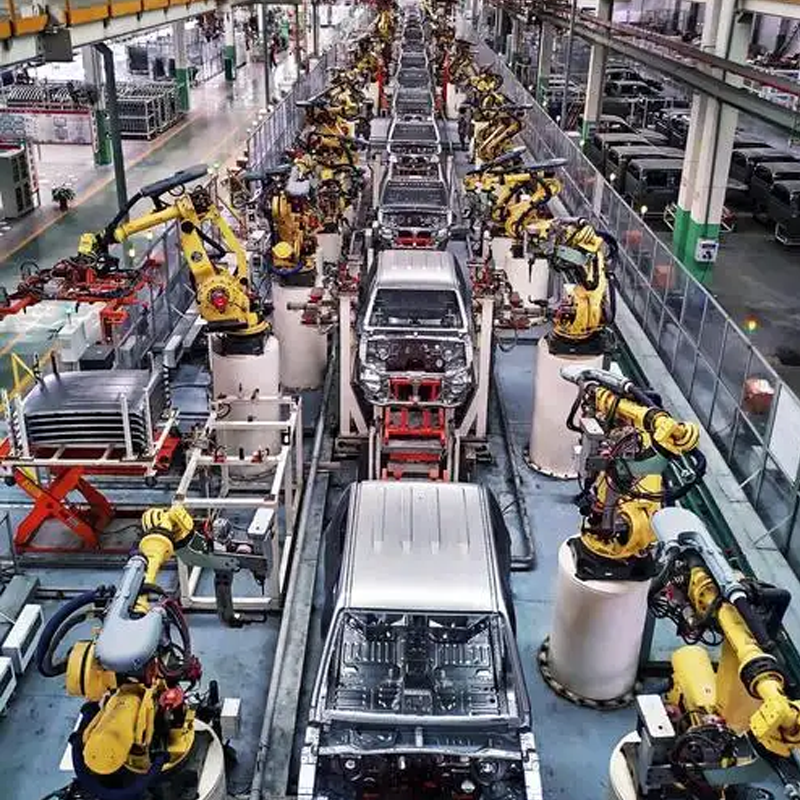
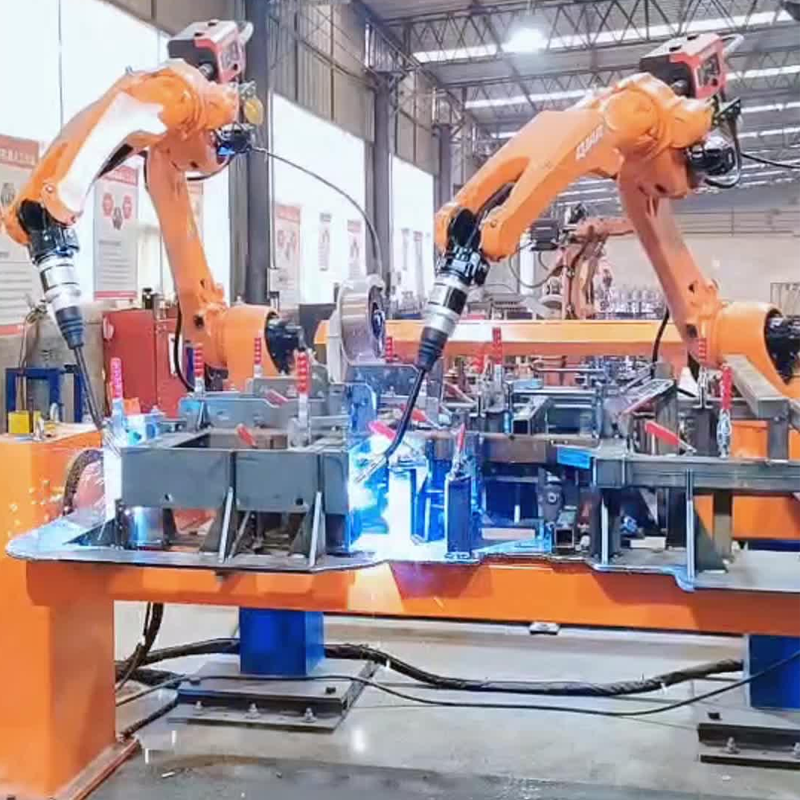
The automation equipment of automobile manufacturing industry has three requirements for lubricating oil: "high precision, low pollution and long service life". The joint bearing of the welding robot needs to use the all-synthetic fluorine lubricating grease, the temperature resistance range can reach - 50 ℃~260 ℃, and the oil sludge caused by welding splash will not be generated; The slider guide rail of the stamping equipment needs to use the extreme pressure anti-wear hydraulic oil, the viscosity class is usually 46 or 68, and the excellent foam resistance is required to avoid the punching accuracy deviation caused by cavitation of the hydraulic system. In addition, the lubricating oil in the automobile painting workshop shall meet the requirements of "Low Volatile Organic Compound (VOC)" to prevent shrinkage cavity defects on the coating surface. It is worth noting that the automobile manufacturing industry often adopts "centralized lubrication system", the lubricating oil needs to have good pumping performance, and pour point depressant needs to be added in low temperature environment in winter to ensure that the lubrication system is not blocked.
SEE MORE
Lubricants in the Steel Industry:
2025-10-09
In the production process of steel, from iron making blast furnace to hot rolling unit, the lubricating oil shall face the extreme working conditions such as instantaneous high temperature above 600 ℃, scrap iron pollution and high pressure rolling. For different equipment, the lubricating oil selection has clear difference: high temperature anti-oxygen anti-rust lubricating oil shall be used for small tuyere sleeve of blast furnace, the base oil shall be mixed with refined mineral oil and synthetic ester, and zinc dialkyldithiophosphate (ZDDP) shall be added in the additive to improve the abrasion resistance; Extreme pressure lithium base grease shall be used for the work roll bearing of the hot rolling mill, and the drop point shall be ≥ 200 ℃ to resist the high temperature conducted during the rolling process; Due to high precision requirements for the hydraulic system of the cold rolling mill, it is necessary to select the anti-wear hydraulic oil with high cleanliness (below NAS 8) and low viscosity index change to avoid the servo valve jamming caused by oil pollution. At the same time, the dual mechanism of "oil monitoring+regular oil change" shall be established for the lubricating oil in the steel industry to detect the oxidation degree of the oil through infrared spectrum analysis (FTIR), so as to ensure that the service life of the equipment is extended by more than 30%.
SEE MORE
Core element of industrial lubricating oil selection, avoiding 90% equipment loss pit
2025-10-09
In industrial production, the selection error of lubricating oil is one of the primary reasons for equipment failure. Correct model selection shall be based on three core dimensions: equipment working condition, lubricating oil performance index and industry compliance requirements. From the perspective of equipment working conditions, it is necessary to focus on load strength (e.g. heavy machinery needs high extreme pressure lubricating oil), operating temperature (synthetic base oil products are preferred in high temperature environment), rotating speed (high-speed bearing needs low viscosity and high mobility oil products); In terms of performance indexes, viscosity index (VI), flash point, pour point and demulsibility are key parameters. For example, the demulsibility of textile machinery shall reach the standard of demulsification time ≤ 10 minutes due to easy contact with water vapor; For industry compliance, food processing equipment must use food grade lubricants above NSF H1 to avoid the risk of product contamination. In addition, the recommendation manual of the equipment manufacturer shall be taken into consideration when selecting the model to avoid the problems of seal corrosion and lubrication failure caused by "general oil replacing special oil".
SEE MORE